7 min read
How to Maintain Balayage & Highlights in Arizona's Dry Desert Climate
Goodyear's sun and hard water are tough on lightened hair. Here's the complete stylist guide to keeping your blonde soft, shiny, and brass-free between appointments.
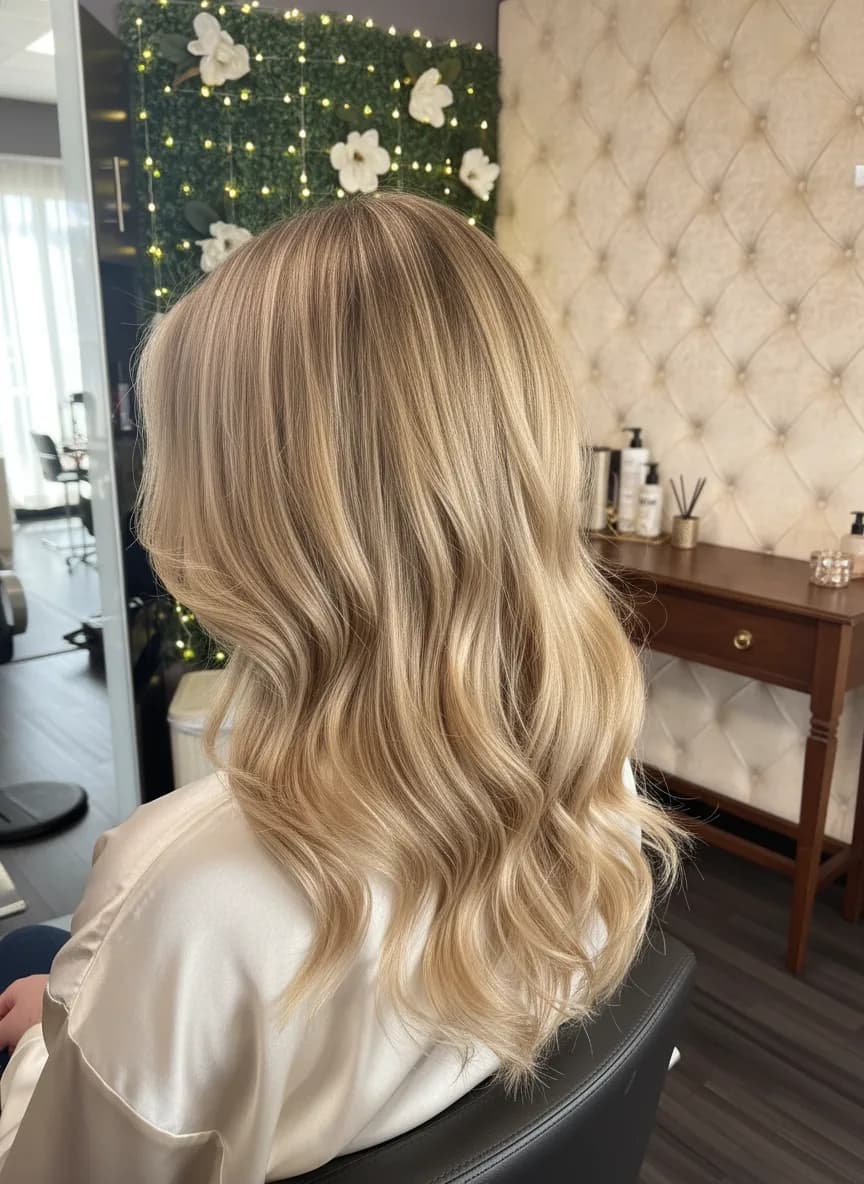
If you live anywhere in the West Valley — Goodyear, Litchfield Park, Avondale, Buckeye, or out in Estrella and Verrado — you already know the Arizona desert is breathtaking and, frankly, brutal on your hair. Months of intense UV, single-digit humidity, chlorinated pool days, and famously hard water all gang up on lightened color. Balayage and highlights are an investment, and without the right care they can go dull, dry, and brassy faster here than almost anywhere else in the country.
The good news: a smart, simple routine keeps your dimension soft, shiny, and salon-fresh for far longer. This is the same guidance we give clients at Magnolia Mane every week, written out so you can put it to work at home.
Why Arizona is so hard on color-treated hair
Lightening opens up the hair's cuticle and makes each strand more porous. Porous hair does two things you don't want: it loses moisture quickly, and it grabs onto whatever is in your water and air. In the desert, that means hair dehydrates fast in the dry climate, while minerals from Goodyear's hard water deposit on the cuticle and dull your tone. Add powerful, year-round UV and the result is the trifecta blondes dread — dryness, brassiness, and fading.
Understanding that is half the battle. Once you know your hair is fighting moisture loss and mineral buildup, the routine below makes complete sense.
Build a color-safe washing routine
How and how often you wash has the single biggest impact on how long your color lasts. Every wash gently fades tone and strips natural oils, so the goal is to wash less and wash smarter.
- Wash less often — every other day or every third day. Stretch washes with a quality dry shampoo at the roots.
- Always use a sulfate-free, color-safe shampoo and conditioner. Sulfates are detergents that strip color and moisture quickly.
- Rinse with cooler water. Hot water swells the cuticle and releases toner and color faster.
- Shampoo the scalp, condition the ends. Your mid-lengths and ends are the oldest, most fragile hair and need the moisture most.
Fight brass with toning — the desert's #1 culprit
Brassiness is the warm, orange or yellow tone that creeps in as your cool toner fades and minerals build up. In Arizona it shows up fast. A weekly purple or blue toning shampoo neutralizes those warm tones and keeps your blonde or bronde looking freshly done.
- Use purple shampoo about once a week for yellow tones (blondes), blue shampoo for orange tones (brunettes with highlights).
- Leave it on for 2–5 minutes, then rinse — start short and build up so you don't over-tone.
- Don't use it every wash; alternate with your regular color-safe shampoo to avoid a dull, ashy build-up.
- Between salon visits, a professional toning gloss can completely revive your tone in about 30 minutes.
Hydrate like you mean it
If brass is the desert's first problem, dryness is its second. Lightened hair in low humidity needs moisture and strengthening replaced constantly. This is where a weekly mask and an in-salon treatment make a visible difference.
- Use a hydrating or bond-building mask once a week in place of conditioner — leave it on 5–10 minutes.
- Add a leave-in conditioner and a few drops of lightweight oil on damp ends to seal in moisture.
- Book a professional hydrating treatment every 4–6 weeks in summer; our scalp-detox and deep-conditioning Hydrating Mask service is built exactly for desert hair.
- Drink water and remember: healthy hair starts at the scalp, so don't neglect it.
Protect against sun, pools, and hard water
A few small habits dramatically slow fading in our climate. UV is the obvious one, but chlorine and hard water are quietly just as damaging.
- Wear a hat or use a UV-protectant leave-in spray on long days outside, by the pool, or at the lake.
- Before swimming, wet your hair with clean water and add conditioner so it absorbs less chlorine; rinse and condition right after.
- Consider a shower filter or a clarifying/chelating treatment to remove the mineral buildup that hard water leaves behind — this is a game-changer for West Valley blondes.
- Use a heat protectant every time you use hot tools, and turn the temperature down a notch.
How often should you come back in?
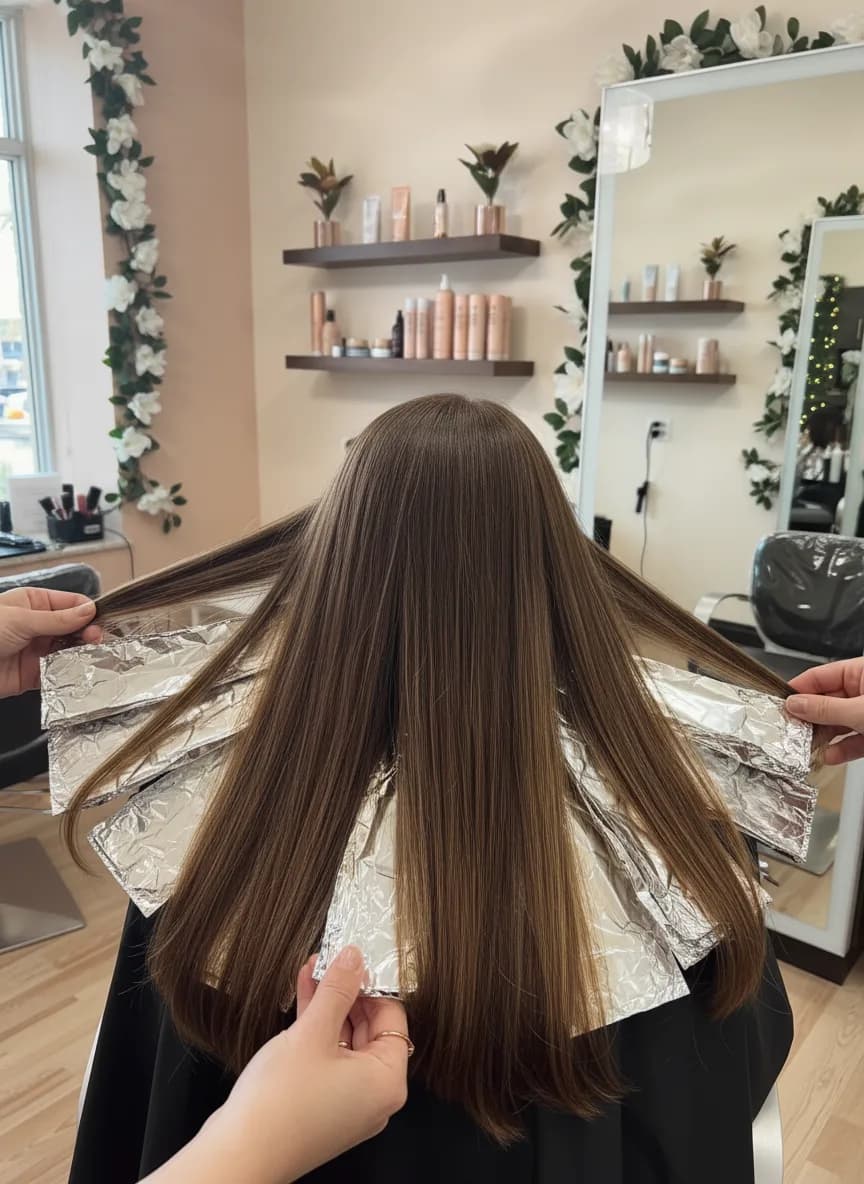
Balayage is designed to grow out softly, which is part of its appeal and why it's so popular for low-maintenance lifestyles. Most clients refresh hand-painted balayage every 10–14 weeks, while brighter, more uniform foil highlights are usually maintained every 8–10 weeks. A toning gloss between full appointments keeps everything looking intentional and fresh.
At your appointment, tell your stylist how much upkeep you actually want. Placement and technique can be tailored to stretch your time between visits — a real advantage when the desert sun is working against you.
Your at-a-glance desert balayage routine
- Daily: protect from sun and heat, refresh roots with dry shampoo.
- Each wash: sulfate-free color-safe shampoo and conditioner, cool water.
- Weekly: purple/blue toning shampoo + a hydrating or bond mask.
- Monthly-ish: clarify mineral buildup; book a hydrating treatment every 4–6 weeks.
- Every 8–14 weeks: refresh highlights/balayage; gloss in between as needed.
Common balayage mistakes that fade color fast
Even clients with the best intentions make a few avoidable mistakes that shorten the life of their color. If your balayage seems to fade faster than it should, one of these is usually the reason — and the fixes are easy.
- Using clarifying or anti-dandruff shampoos regularly — they're powerful detergents that strip tone quickly. Save clarifying for the occasional mineral cleanse.
- Washing with hot water out of habit. It feels great, but it opens the cuticle and rinses tone down the drain.
- Skipping heat protectant "just this once." Repeated unprotected heat is one of the biggest causes of dryness and fading in the desert.
- Over-using purple shampoo until hair looks dull or ashy — it's a once-a-week tool, not an everyday one.
- Letting hard-water buildup accumulate for months without a clarifying or chelating treatment.
Signs it's time to book a refresh
Part of loving your color is knowing when to come back in. Watch for these cues, and don't wait until your hair feels far gone — a timely gloss or refresh is always easier (and gentler) than a big correction.
- Visible warmth or brassiness creeping back in, especially around the face and ends.
- Your blonde or bronde looks flat and has lost its shine and reflection.
- Grown-out regrowth is creating too strong a contrast for your liking.
- Ends feel dry, rough, or are starting to look see-through and need a dusting.
Ready for fresh dimension that's built to last in our climate? Book a highlights or color appointment at Magnolia Mane in Goodyear, and we'll design a look — and a maintenance plan — that fits your hair and your desert lifestyle.